Where to Eat in the Gaslamp Quarter You'll Actually Love
The Gaslamp's Victorian storefronts hide two different restaurant scenes, one built for foot traffic and one built to last, and knowing which block you're on decides whether dinner is worth it.
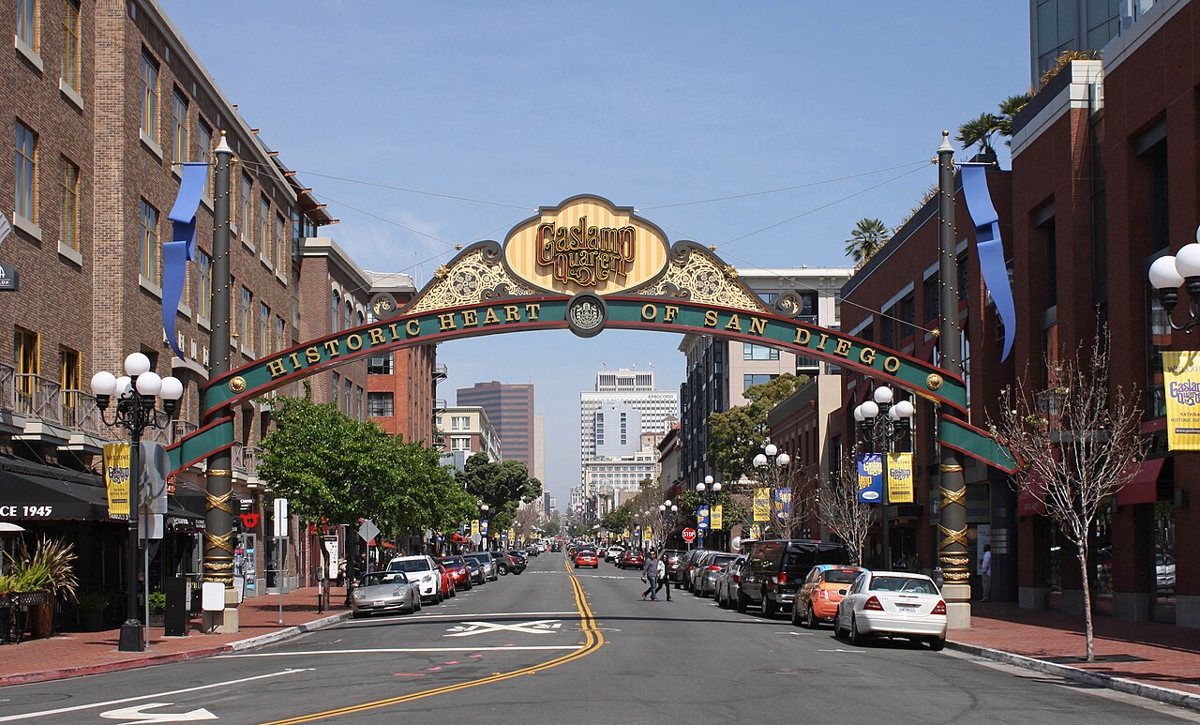

Walk down Fifth Avenue on a Saturday night and you'll pass a horse-drawn carriage, a tour group trailing umbrellas, a bachelorette party in matching sashes, and a knot of Padres fans still in their jerseys hours after the last out, all under wrought-iron balconies that have watched this block since the 1880s. The Gaslamp Quarter is one of the few places in the country where a Victorian-era district got landmarked instead of bulldozed, and it eats like it looks: dense and dressed up, and not always what it seems. Knowing where to eat in the Gaslamp Quarter without wasting a meal takes some local instinct.
The district's whole layout works against you if you don't know the pattern. Sixteen blocks of restored brick and cast-iron storefronts sit two minutes from Petco Park, a few more from the convention center, and a short walk from the cruise terminal, which means every restaurant on the main drag has a captive audience that isn't coming back next week. That's not a moral failing on the neighborhood's part. It's just economics. A restaurant that depends on repeat local business behaves differently than one that depends on whoever's walking by after a ballgame, and you can usually tell which is which if you slow down for thirty seconds before sitting.
Where to Eat in the Gaslamp Quarter Without Getting Steered
The most reliable local trick is the simplest one: watch who's eating there before you decide to. A patio full of people still wearing conference lanyards or ballpark gear at nine on a Tuesday tells you the place turns tourists and doesn't need to earn a second visit. A dining room with a mix of ages, a bartender who knows a regular's order, or a line of industry workers grabbing a late plate after their own shifts ended says something different. Menus with laminated photos of every dish, staff stationed outside to wave down passersby, and a happy hour board propped on the sidewalk before 4 p.m. are the clearest tourist-trap signals in the district. None of those things make a restaurant bad on principle, but they're a pattern worth noticing.
Side streets do a lot of the work too. Fifth Avenue is the spine everyone photographs, but Fourth Avenue, Island Avenue, and the quieter cross streets running toward Market carry restaurants that don't rely on sidewalk traffic to survive. Stepping one block off the main strip, even briefly, changes the math on both price and crowd.
What the Neighborhood Actually Does Well
The Gaslamp earns its reputation in a few specific lanes rather than across the board. Steakhouses do serious business here, in dining rooms carved out of the same century-old buildings that give the district its landmark status, and the better ones lean into that history instead of covering it up with neon. Italian restaurants cluster thickly too, a smaller echo of the concentration you'd find a short drive north in Little Italy's Saturday Mercato, though the Gaslamp's versions trend more toward white-tablecloth than market-stall. Seafood houses do well by the same logic that makes San Diego a seafood town generally: proximity to the water and a supply chain that doesn't have to travel far.
Upstairs is where the district gets interesting. A number of the Victorian buildings hide second-floor rooms, former speakeasies, and cocktail bars with kitchens attached, spaces that don't advertise from the street and reward anyone willing to look for a doorway or a narrow staircase instead of a lit sign. Those upper floors carry a different energy than the ground-level patios, quieter and less scripted, and they're often where the neighborhood's actual regulars end up.
Cuisines Worth Seeking Out
- Steakhouse dining rooms set inside restored 19th-century buildings, where the architecture is doing real work rather than serving as backdrop
- Italian kitchens, from old red-sauce standbys to more market-driven menus
- Seafood, given the district's proximity to the working waterfront a few blocks west
- Craft cocktail bars with kitchens serious enough to eat a full meal at, often on upper floors away from street noise
Time It Around Petco Park
Game days rewrite the neighborhood's rhythm entirely. In the two hours before first pitch, Fifth and Fourth Avenues fill with fans moving toward the park, and restaurants along that corridor turn into staging grounds rather than places built for a relaxed dinner. Reservations vanish, wait times stretch, and kitchens start cutting corners to keep pace. The smarter move on a game night is either eating well before the crowd builds or well after it clears out, once the ballpark empties back onto the streets and the same restaurants return to a normal pace. Weekday lunches, by contrast, are the best-kept secret in the district: office workers from downtown fill the same dining rooms that feel like theater sets on weekend nights, and prices, portions, and service tend to reflect a kitchen cooking for people who'll be back next week.
The Border Runs Through Here Too
It's easy to think of the Gaslamp as sealed off from the rest of San Diego's food identity, all steakhouses and sports bars, but the district doesn't exist in isolation from a city where cross-border cooking shapes almost everything. The adobada, birria, and Baja-style techniques that define so much of the region show up on Gaslamp menus too, sometimes folded into modern American plates, sometimes served straighter by cooks who trained in kitchens closer to the border or grew up eating the food traditions of Barrio Logan before working their way downtown. It's worth remembering that a fifteen-minute drive separates this dining room from Tijuana, and that proximity shows up in the kitchen even when the dining room looks like Victorian San Diego on a postcard.
The honest takeaway is that the Gaslamp Quarter rewards the same skepticism you'd bring to any dense, tourist-heavy strip in any city: read the room before you read the menu, walk one block off the main drag when you can, and pick your hour around the ballpark schedule rather than in spite of it. Do that, and the same sixteen blocks that trip up a first-time visitor start to look like what they actually are, a working restaurant district that happens to sit inside a historic postcard.