Best Italian in North Park You'll Actually Love
North Park has earned a reputation for ambitious cooking and strong opinions, and here's how to find Italian worth a detour, not just a default dinner.
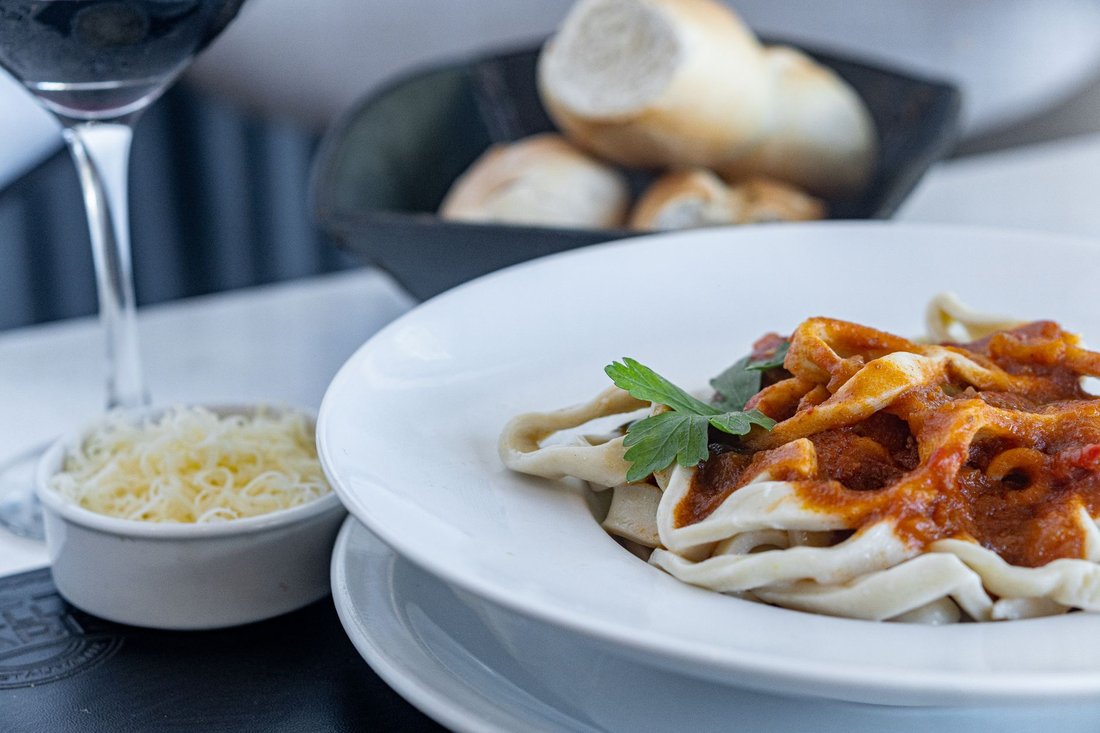
The best Italian food in North Park doesn't announce itself with a checkered tablecloth or a candle in a Chianti bottle. It shows up in a neighborhood that has spent the better part of two decades arguing, productively, about what good food actually means. North Park's dining culture was forged by the same restless energy that built its craft brewery scene: a genuine preference for doing things from scratch, a deep suspicion of the generic, and a customer base that reads menus the way other people read legal briefs. Finding the best Italian in North Park means understanding that context first.
Italian food in San Diego has a longer, stranger history than most visitors expect. The tuna fishing industry brought Sicilian families to Point Loma over a century ago, and their descendants shaped how this city first understood pasta, olive oil, and the particular pleasure of a table set for five hours on a Sunday. That heritage doesn't live loudly on North Park's stretch of University Avenue, but it informs the seriousness with which locals evaluate a plate of cacio e pepe. This isn't a neighborhood that grades on a curve.
What Actually Makes the Best Italian in North Park Worth Your Time
The honest answer to finding great Italian here is structural: look for pasta made in-house. It sounds obvious, but the gap between dried pasta executed competently and fresh pasta executed brilliantly is the single clearest dividing line in this cuisine. A restaurant willing to staff and equip a pasta program is signaling something about its priorities. When you call ahead or check a menu, ask. When the server can't tell you whether the dough is made on premises, that's information.
Beyond pasta, look at the protein sourcing. Southern California gives Italian kitchens extraordinary raw material: local albacore, Baja-adjacent shellfish, farms in the Chula Vista corridor that supply serious produce year-round. A North Park Italian spot taking advantage of that geography, putting local fish through a Southern Italian preparation or using avocado-region olive oil in a way that isn't precious about it, is using its location intelligently. One that reads like it could have been transplanted wholesale from a strip mall in Scottsdale probably hasn't thought hard enough about where it is.
The wine list matters more than people admit. Italian varietals like Vermentino, Aglianico, Nero d'Avola, and Barbera are showing up on more serious lists in San Diego, and they matter because they were built to drink alongside the food. A list that offers only Pinot Grigio and Chianti Classico isn't necessarily bad, but it's probably not talking to the same kitchen. North Park's drinking culture, well-documented in its beer bars and taprooms, has educated palates. Italian restaurants here have to compete with that standard of intentionality.
Regional Italian Styles to Seek Out
Italy's cuisine is not one thing, and North Park at its best reflects that. Roman cooking, the cacio e pepe and carbonara and amatriciana of it, is technically demanding and nearly impossible to fake. The emulsification in a proper carbonara, the starch-to-fat ratio in cacio e pepe: these dishes punish shortcuts immediately. When you order one of them, you learn a great deal about a kitchen's discipline within the first three bites.
Northern Italian preparations, particularly anything in the Emilia-Romagna tradition, with its ragù and stuffed pasta and egg-yolk doughs, reward restaurants with patience and refrigerator space. They're slower food, more expensive to produce, and they signal a different kind of ambition than a quick sauté. If a menu lists a slow-braised short rib sugo or a hand-rolled garganelli, that's a kitchen that planned ahead.
Southern Italian and Sicilian cooking is arguably the style that fits San Diego most naturally. The seafood-forward preparations, the citrus, the capers and preserved fish, the tendency toward bright acidic sauces rather than heavy cream: it all maps onto what grows and swims here. A Sicilian-inflected menu in North Park isn't an affectation. It's geographic logic.
How to Order Well
Order pasta as a course, not a main. This is how it works in Italy and it's how you actually taste what a kitchen can do. A single generous bowl of rigatoni all'amatriciana tells you more than a chicken parmigiana smothered in mozzarella, which is a dish that forgives a great deal of mediocrity. Take the half-portion option if the menu offers one.
Pay attention to the bread. Restaurants that take the opening bread service seriously, with good crumb, proper salt, and real olive oil, are usually thinking carefully about the whole meal. It's a small signal, but it holds.
Ask the server what's been made that day. Specials in a serious Italian kitchen aren't a way to move product; they're the kitchen's response to what arrived from the market that morning. A server who can answer that question with specificity is working somewhere that cares.
Skip the tiramisu unless someone at the table has a genuine emotional need for it. The dessert that tells you most about a kitchen is usually the panna cotta or the affogato, simpler preparations where quality of dairy and coffee can't hide. North Park's coffee culture has raised the bar for what espresso should taste like in this neighborhood, and a good affogato has to clear that bar.
The Neighborhood's Honest Limitations
North Park is not Little Italy, and here the name is literal. San Diego's Little Italy along India Street has a longer concentration of Italian restaurants and a different density of options. If pure volume of choice is the goal, that's where to go on a Saturday after the Mercato clears out. North Park offers something different: a neighborhood where Italian cooking has to earn its place among a lot of competition, which tends to make the good places better and the indifferent places short-lived.
The neighborhood's rent pressures have also pushed some ambitious cooking into smaller formats: counter service, limited hours, tasting-menu-only models that require planning. That's not a failure of the scene; it's an adaptation to economic reality, and it means the best experiences here sometimes require a reservation made further out than you'd expect for what is, technically, a mid-sized neighborhood restaurant.
What North Park Italian actually rewards is the customer who shows up curious rather than certain. Leave the mental checklist of what Italian food is supposed to look like at the door, pay attention to what the menu is trying to do, and order one more glass of wine than you planned on. The neighborhoods along the 30th Street corridor have been building toward something worth taking seriously. The pasta is the proof.